

Supporting Children with Autism & Learning Difficulties, Together with Families.
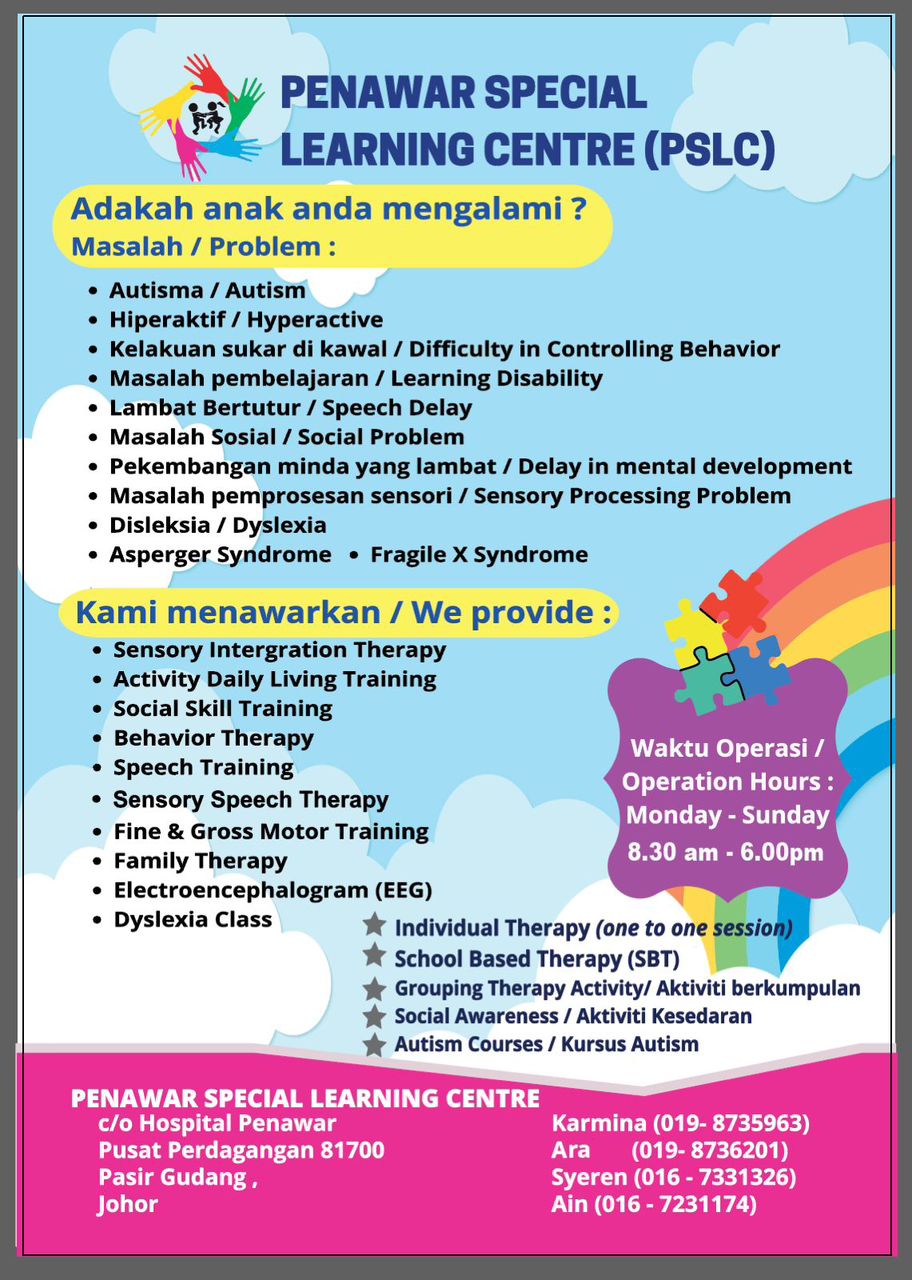
Penawar Special Learning Centre (PSLC) is part of Penawar Medical Group (PMG), with a simple goal: to improve the lives of all autistic children and the families who love them.
What is Autism?
Autism is often referred to as a "hidden disorder." This is because autistic children do not exhibit physical indicators that they have autism (i.e., they look normal). Autism can only be detected via observing their behaviour.
ASD is an abbreviation that stands for Autistic Spectrum Disorder. This serves as an umbrella term for all autism-related disorders. The term ASD being an abbreviation of Autistic Spectrum Disorder is meant to convey that autism exists as a spectrum – with each affected individual presenting a unique set of symptoms (both in kind and severity).
Technically, ASD is a neuro-developmental disorder. This means that the autistic child's brain develops and functions differently from other children. In practice, this translates into difficulties in the following areas:
- Social Skills
- Communication
- Sensory Processing
- Adherence to Routines
Autistic children experience tremendous difficulty in interpreting verbal and non-verbal communication. This is coupled with their inability to recognise social cues that most people intuitively understand and therefore take for granted.
Similarly, autistic children have significant difficulty in processing sensory input (e.g., sounds, touch). They are either over-stimulated or under-stimulated. This can lead to distressing experiences as well as "unusual" behaviour.
Finally, autistic children tend to display repetitive behaviour. This can be anything from hand flapping to insisting on specific routines.
In summary:
- autism is a hidden disorder – autistic children look normal
- it is a spectrum disorder – no two autistic children are identical
- it affects social and communication skills
- it affects how sensory input is processed
- it causes repetitive behaviour and rigid adherence to routine
Meet Our Team
Get to know the multidisciplinary team behind Penawar Special Learning Centre – including special education teachers, therapists and support staff who work closely with children and their families.
Individual With Autism
THE INDIVIDUAL'S EXPERIENCE OF ASD
ASD is a spectrum disorder. Accordingly, each child's experience is unique. This is not just seen in the symptoms exhibited but also in their severity. Symptoms often demonstrate themselves by the time the child is two years old. However, ASD can be reliably diagnosed as early as the eighteenth month.
There are broad shared areas that can give us greater insight into what it is like to live with ASD. These shared areas are:
- social communication impairments
- repetitive patterns of behavior
- inability to process sensory input
Social Communication Impairments
These impairments relate to the child's ability to interact within a social context. The classic indicator of this is the child's inability to maintain eye contact and difficulty in sustaining a conversation. Other examples include appearing to lack empathy and also difficulty in processing verbal and non-verbal communication.
Repetitive Patterns of Behaviour
Children with ASD will display an affinity for repetitive behaviour. The action most associated with this are hand flapping and spinning around in circles. This pattern can also manifest itself in fixations e.g. watching the same segment of a movie over and over again. Other ways in which this can be seen is in an autistic child's insistence on routine and rigid workflows.
Inability to Appropriately Process Sensory Input
ASD is a neuro-developmental disorder. As such, an autistic child faces tremendous difficulty in processing sensory input. For example, an autistic child might be over sensitive to sound - hearing the softest sounds as if they were explosions. Similarly, an autistic child might feel much pain even at another person's slightest touch.
In summary
- each person with ASD is unique i.e. no two people with ASD have the same symptoms
- children with ASD see, hear and feel the world differently: they process sensory input differently
- an autistic child's behaviour is his way of communicating with the world
- routine is important to an autistic child
In addition to the various impairments, autistic children also possess abilities that are extraordinary. For example, some have been known to be able to play complicated passage in music by ear or show an uncanny ability to process numbers.
In this bigger scenario, children with autism are no less than normal children, they are just different. When dealing with autistic children it is best to think of what they can do instead of just focusing on what they can't do.
Families with Autism
Living With Autism (Siblings)
Once a child is diagnosed with ASD everything changes. It invariably will lead to a shift in priorities within the family unit. Most obvious will be changes in how time and money will be spent. Relationships and responsibilities will never be the same again.
The key to successfully managing these changes is in recognising and accepting that these changes are inevitable.
In this section we will first look at how the presence of an autistic child in a family affects siblings. At this point it must be said that generally siblings cope well with the experience of having an autistic brother or sister. However, this does not mean that the siblings of an autistic child are free from the special challenges inherent in their circumstances.
The sibling of an autistic child may experience any numbers of the following stresses in their daily lives:
- Jealousy regarding the extra attention given to the autistic child
- Feeling/sharing the parents' grief
- Competing with the autistic child for the parents' attention/affection
- Embarrassment at the hand of peers
- Frustration at their inability to connect with the autistic brother/sister
- Worry over having to be in the care-giver role for the autistic sibling in the future
There are several strategies that can be adopted to help siblings of an autistic child cope with the change in circumstances. These include:
- Understanding Autism – experts agree that parents must help their 'normal' children understand autism. This must be done as soon as possible. It must also be done often and couched in terms that are appropriate to the sibling at their particular stage of development.
- Engagement / Bonding – siblings are encouraged to bond with the autistic child. This can be done by teaching them simple skills that will enable them to engage the autistic child in play. There are also special teaching skills that can be taught to siblings that will help strengthen their bond with the autistic child.
- Special Time – parents must regularly schedule specific times that is meant for children who do not have ASD. This is to satisfy their need to feel special, too.
Generally, siblings cope well with the experience of having an autistic brother or sister. However, this cannot be taken for granted. Employing the suggested strategies will make things significantly more manageable.
Dyslexia
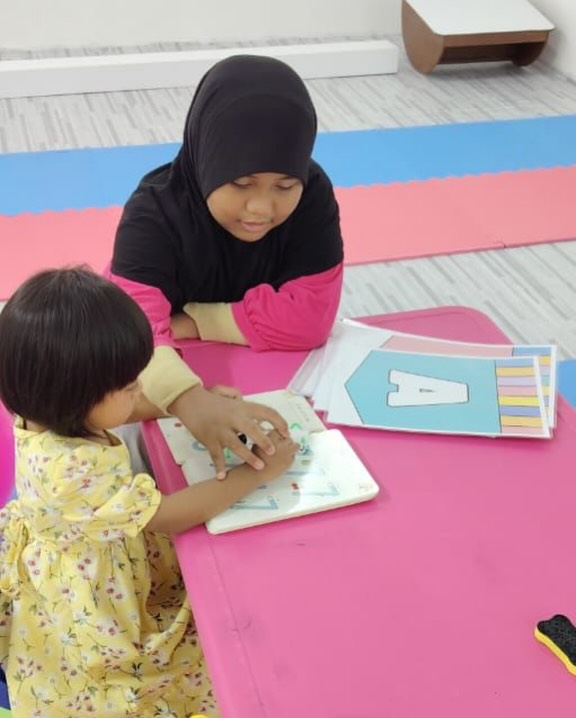
Dyslexia is a specific learning difficulty that mainly affects the development of reading and spelling skills. Children with dyslexia often have normal intelligence, but their brains process written language in a different way.
Common signs of dyslexia may include:
- Slow and effortful reading
- Difficulty recognising letters and letter sounds
- Frequent spelling mistakes or reversed letters (b/d, p/q)
- Problems copying from the board or written notes
- Avoiding reading or written tasks in class
Early identification and intervention are very important. With the right support, children with dyslexia can learn effective strategies to improve their reading and writing skills, and gain confidence in the classroom.
How PSLC can help
At Penawar Special Learning Centre, our team provides assessment and targeted intervention programmes for children with dyslexia, focusing on:
- Phonics-based reading support
- Multi-sensory teaching approaches
- Individual and small-group intervention sessions
- Guidance for parents and teachers on classroom support
If you have concerns about your child's reading or learning, please contact our team to discuss an assessment or intervention plan that suits your child's needs.
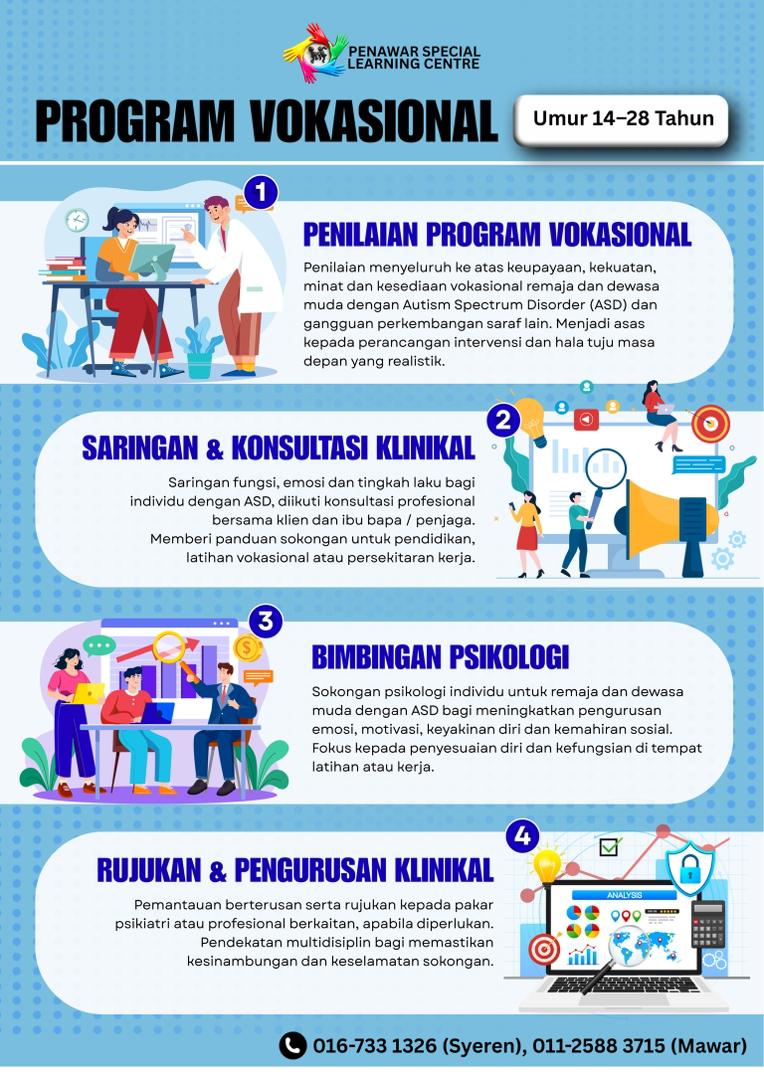
Vocational Training & Autism
Vocational training helps young people with autism develop practical skills for daily living and future employment. Structured, supportive programmes can build confidence, routines and independence.
Examples of vocational skills include:
- Basic office tasks (filing, photocopying, simple data entry)
- Hospitality and café skills (serving, simple food preparation)
- Arts, crafts and creative activities
- Simple retail tasks (stock arrangement, packing items)
For many individuals with autism, learning through real-life practice is more effective than classroom theory alone. Vocational programmes give them the chance to:
- Learn work habits such as punctuality and responsibility
- Practise communication and social skills in a safe setting
- Discover their interests and strengths
- Prepare for supported or open employment in the community
At Penawar Special Learning Centre, vocational training is tailored to each student's ability and comfort level, with close guidance from teachers and therapists. The aim is to help every young person move towards a more independent and meaningful adult life.
About Penawar Special Learning Centre (PSLC)
Penawar Special Learning Centre (PSLC) is part of Penawar Medical Group (PMG). PMG is a healthcare management company that currently owns and operates Hospital Penawar Pasir Gudang and the chain of clinic known as Poliklinik Penawar.
Our goal is simple: to improve the lives of all autistic children and the families who love them.
Latest Programmes & Announcements
Information on programmes, activities, workshops and important announcements from PSLC.
A Special Education Workshop
Teaching the Way Children Learn
📅 21&22February 2026
⏰ 9.00 AM – 3.30 PM
📍 PSLC Melawati
This 2-day workshop is designed for parents & teachers to learn practical strategies to support children with different learning needs.
✅ Certificate provided
✅ Meals included
✅ Training fully complimentary materials
🔍 Learn about:
* How children learn differently
* Behaviour & emotional support strategies
* Practical tools for home & classroom
💰 Fee: RM185
📲 Register here:
https://forms.gle/hK6kK8z8Jp7xM4GX6
📞 Enquiries:
Mirza – 019 436 9497
Orkid – 016 577 9258
Looking forward to welcoming you
Program Vokasional
Program Vokasional
Assalamualaikum & salam sejahtera ibu bapa yang dihormati,
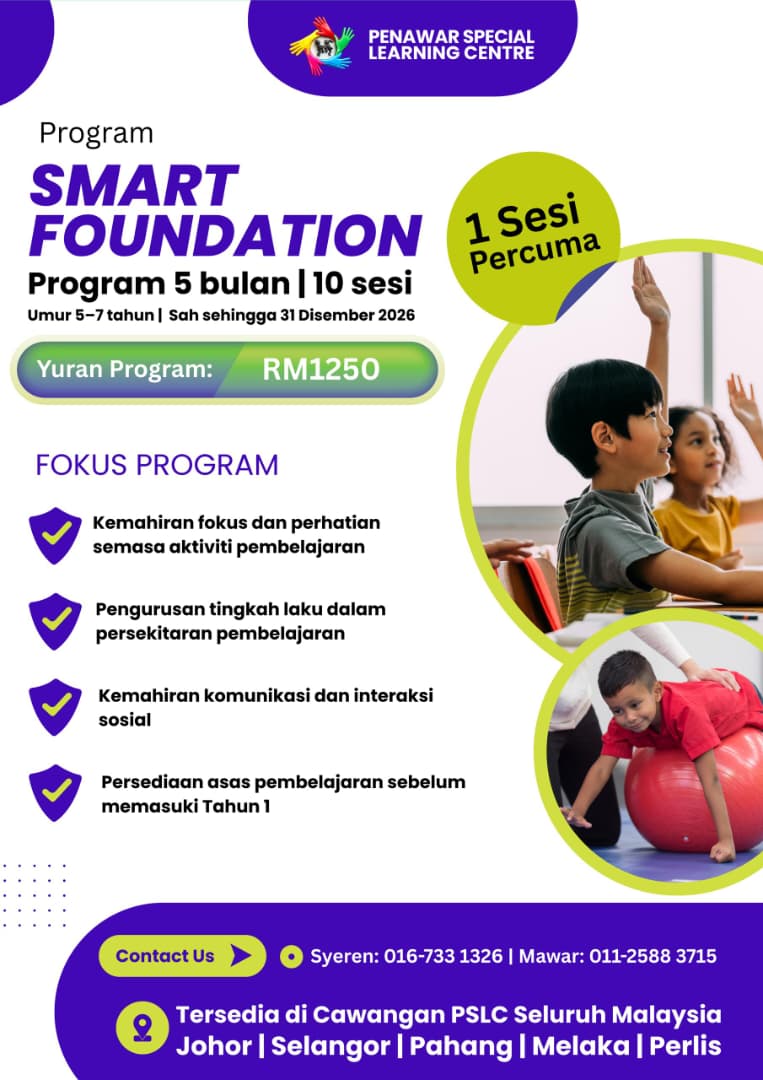
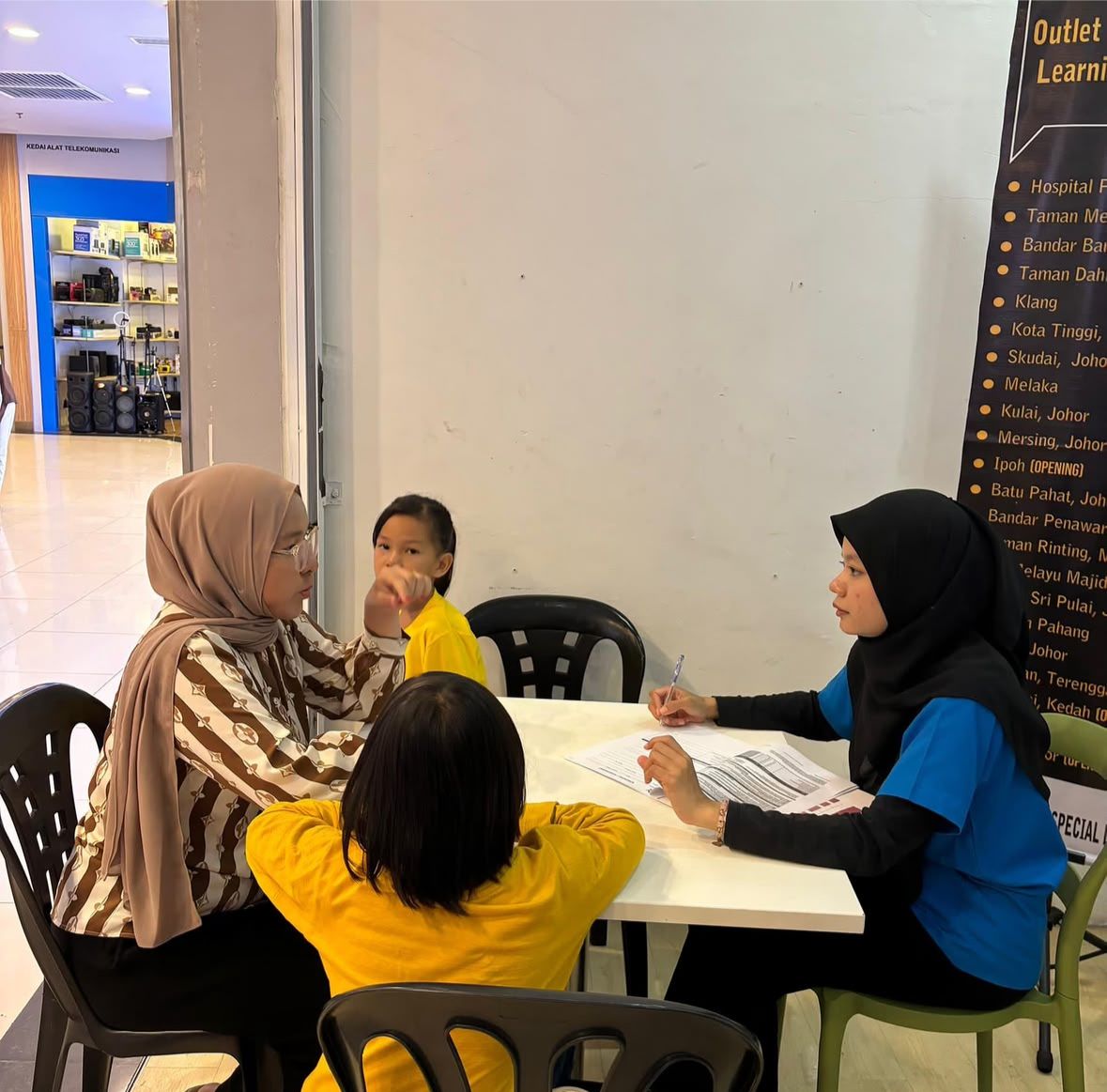
Penawar Special Learning Centre (PSLC) kini membuka School Readiness Screening untuk kanak-kanak berumur 5–7 tahun. Program ini bertujuan menilai tahap kesediaan pembelajaran anak sebelum memasuki sekolah rendah, merangkumi tumpuan dan tingkah laku, bahasa dan komunikasi, literasi dan numerasi awal, kemahiran motor halus serta perkembangan sosial dan emosi.
💰 Yuran: RM65 seorang (termasuk laporan saringan)
📍 Tersedia di semua cawangan Penawar Special Learning Centre (PSLC)
👉 Imbas kod QR atau klik pautan untuk mendaftar:
https://forms.gle/Xg79Re6tip3DmpHY8
Terima kasih. Kami sedia membantu menyokong perkembangan anak anda ke alam persekolahan.
Greetings from Penawar Special Learning Centre , 💐
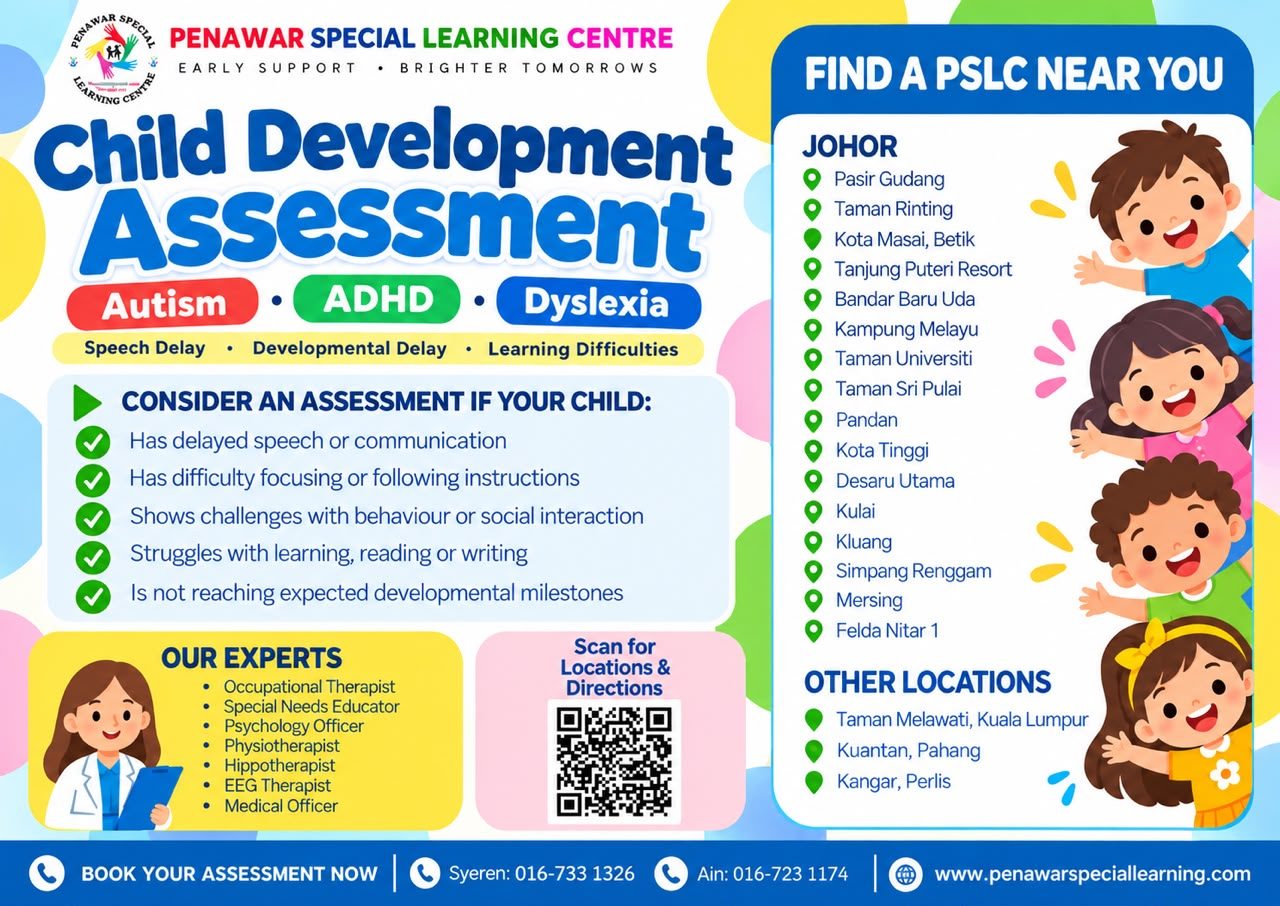
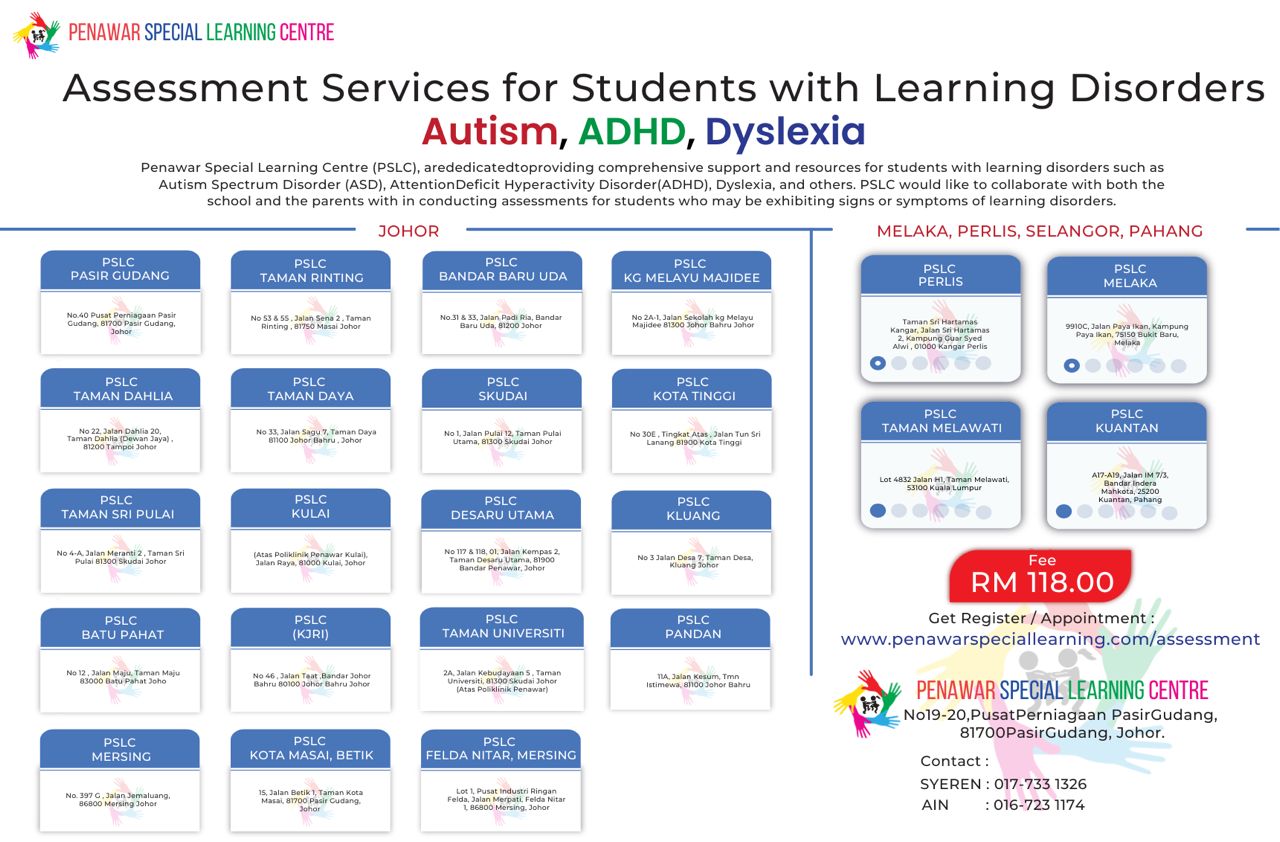
We are offer Assessment Services for Students with Learning Disorder
Autism • ADHD • Dyslexia • Behaviour Problem
Get your appointment at
www.penawarspeciallearning.com/assessment
For any inquiry 📞 :
Ms Syeren : 0167331326
Ms Ain : 0167231174
Thank you 💐
A Special Education Workshop
Teaching the Way Children Learn
📅 7 & 8 February 2026
⏰ 9.00 AM – 3.30 PM
📍 PSLC Melawati
This 2-day workshop is designed for parents & teachers to learn practical strategies to support children with different learning needs.
✅ Certificate provided
✅ Meals included
✅ Training fully complimentary materials
🔍 Learn about:
* How children learn differently
* Behaviour & emotional support strategies
* Practical tools for home & classroom
💰 Fee: RM185
📲 Register here:
https://forms.gle/hK6kK8z8Jp7xM4GX6
📞 Enquiries:
Mirza – 019 436 9497
Orkid – 016 577 9258
Looking forward to welcoming you 🌈
Tempah Sesi Terapi Anak Melalui TherapNet
Hai ibu bapa! 👋
Ada berita baik untuk anda!🎉
Kini lebih mudah untuk menempah sesi terapi anak di Penawar Special Learning Centre. Anda tidak perlu lagi membuka Google, kerana semua tempahan boleh dibuat terus melalui aplikasi mudah alih TherapNet! 📱
👉 Muat turun aplikasi ini sekarang:
• Pengguna Android:
https://play.google.com/store/apps/details?id=com.therapynet.pslc
• Pengguna Iphone:
https://apps.apple.com/my/app/therapynet/id6749725415
Semoga urusan anda menjadi lebih mudah dan bermanfaat untuk kita semua. 💙
Sekian,
Pihak Pengurusan PSLC
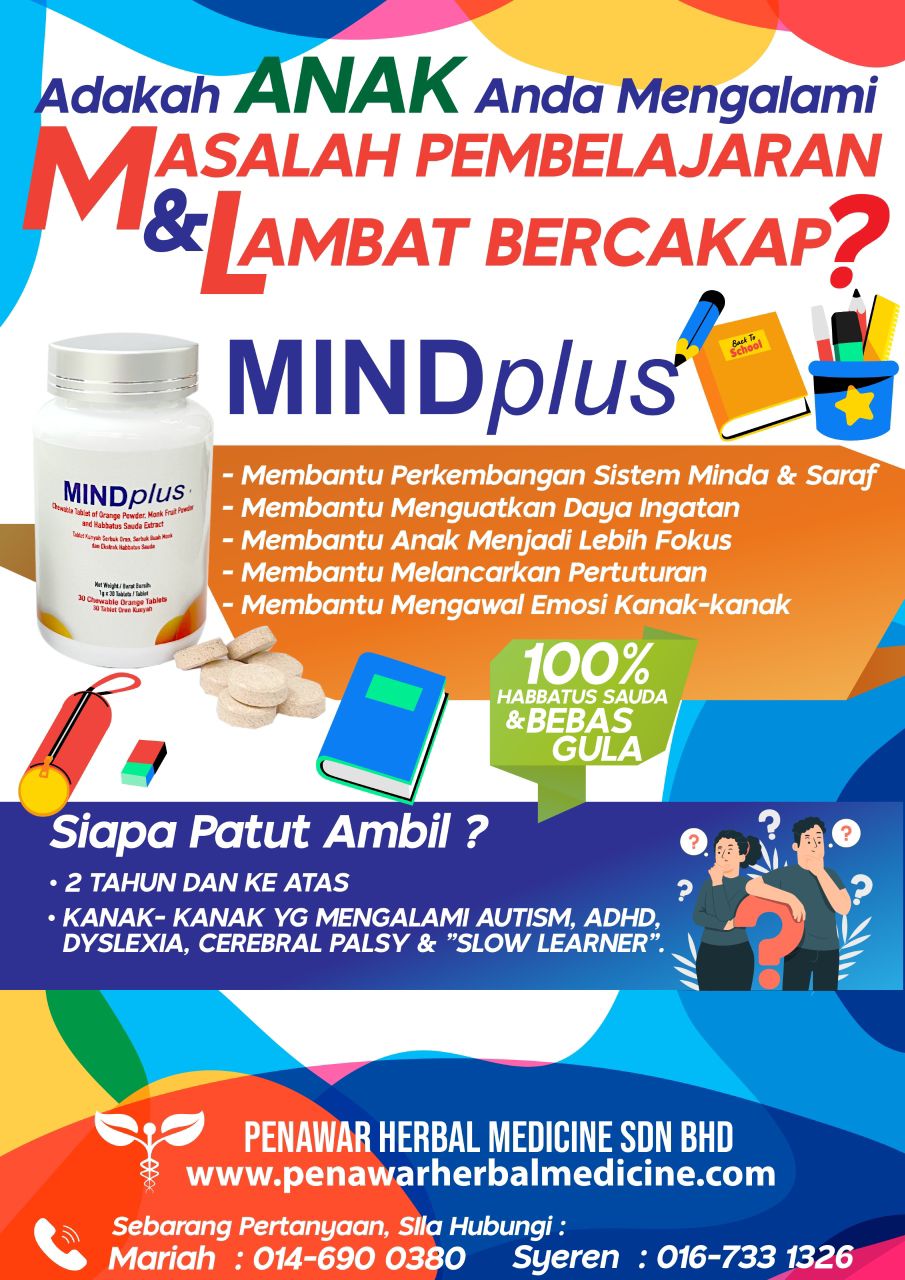
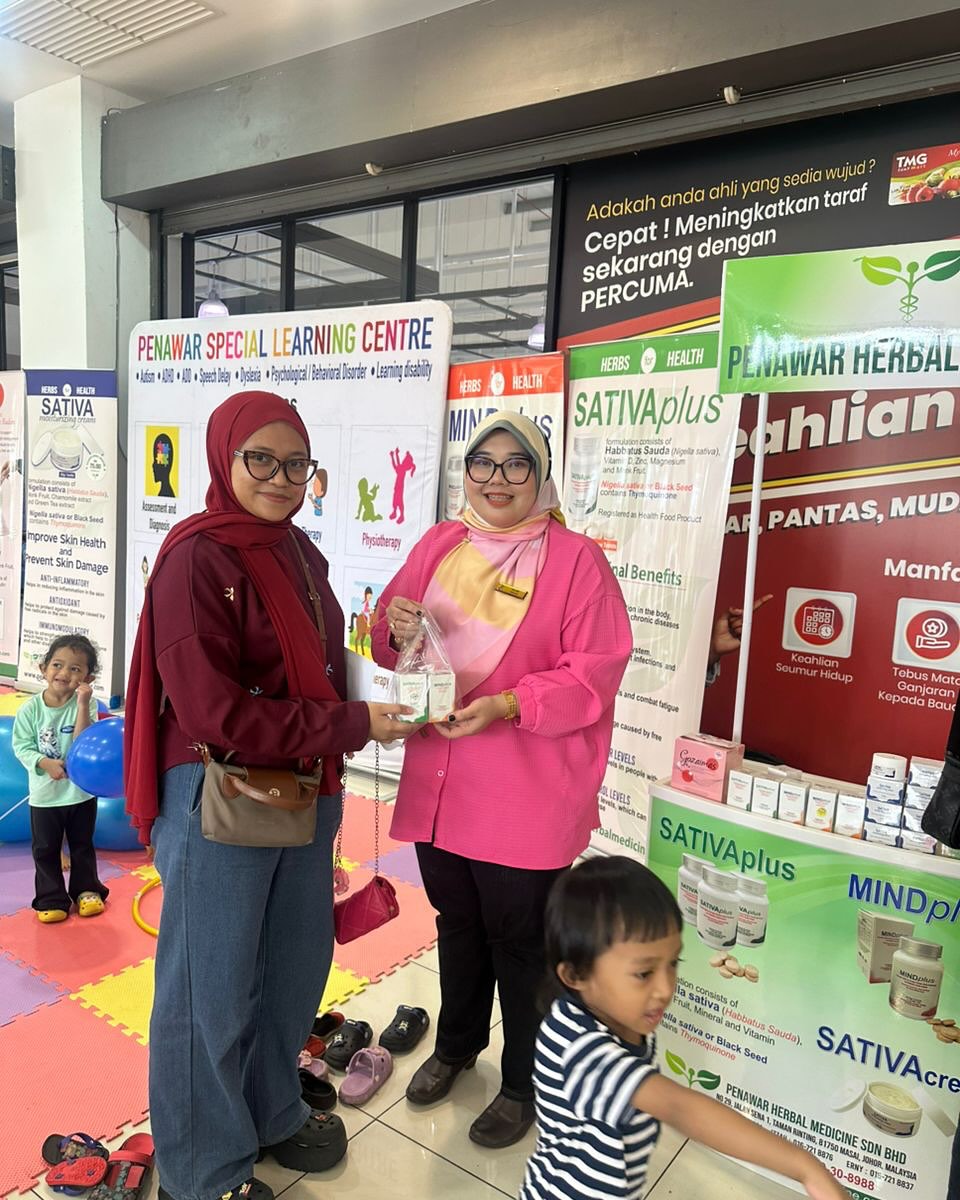
MINDplus untuk Anak-Anak
MINDplus untuk Anak-Anak 👧🏻👦🏻🧒🏻📖📚✏️
Mindplus ialah suplemen minda yang dirumus khas untuk menyokong perkembangan kognitif dan mental kanak-kanak.
Diperbuat daripada bahan semulajadi yang selamat dan berkesan, ia membantu anak-anak mencapai potensi penuh mereka dalam pembelajaran dan kehidupan harian.
🚀 Beri anak anda kelebihan untuk berjaya dengan MINDplus!
🔗 Lawati laman web kami untuk pembelian:
www.penawarherbalmedicine.com
🍊🌱 Terima Kasih